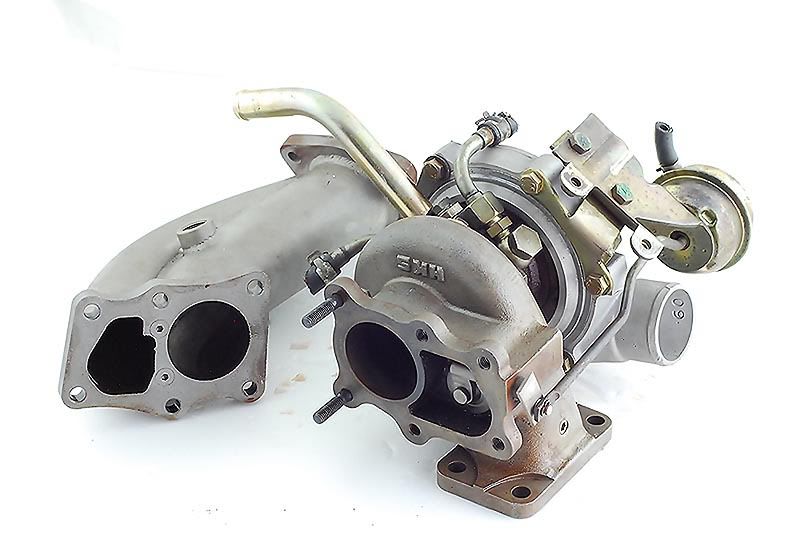
I'm fitting a different turbo and need to modify the current dump with a different flange. It would be easier to merge the internal wastegate & turbine out into one large oval-shaped piece of pipe - or I could take the effort to keep the wastegate separate like this (but have it merge into the main pipe a lot later - I'm not limited by being a factory bolt-on replacement):
EDIT: I am aware of the supposed gains from divorcing the wastegate, but can anyone comment on any difference it actually makes, and is it worth the effort?
Last edited by Stefan; 11-11-2008 at 11:01 AM.
A divorced dump is designed to separate the two different exhaust gas flows - which is all aimed to improve response.
The outlet from the turbine is spinning because of the turbine, which isnt good for flow. The best case would be to 'promote' the spin to change to laminar flow which is apparently done by a sharp step up in pipe diameter (say from 2.5 to 3 inch).
The wastegate pipe is not used often (stays cool) and when it does it heats up rapidly compared to the normal exhaust, so if there is no flex in there then you may get some cracking. The length required before merging should be as long as possible (though there will be a point of no more gains but this can only be found by testing), but the drawbacks to this are space, weight and the previously mentioned thermal shock. And remember to increase the pipe diameter at the merge as you will have an increased exhaust gas volume and trying to put that throught the same diameter pipe will cause a restriction.
Also, if you are building this yourself then you have the opportunity to create a removable section for the track to make it a screamer pipe.
If you really want to know the difference, then hook up a data logger and do it the easy way first and make the changes later.
I'm am aware of the supposed gains, but was just after some feedback.
As the wastegate is only open once making the boost level that the actuator is set to open at, would any response gains only be apparent when the turbo is making a lot of boost? 'Response' in regards to turbo applications is normally to do with the time it takes the turbo to come onto boost in the first place, and I don't see the wastegate pipe design having any bearing on this.
I could be wrong here, but as far as i can see, if you don't have an electronic boost controll, your waste gate is going to be gradually opening the whole time you're boosting up, as it is only controlled by vacuum (or boost) which will be gradually increasing. So if you're running just a t piece, or a vacuum controlled wastegate, i think it might affect flows the whole time.
Sorry, i didnt know your understanding of the subject and i dont think your first post led us to know exactly what you wanted to know.
You make a good point about the reponse of the turbo not being affected by the wastegate untill its actually in use but i think some of my points are still valid. The design goals of each pipe are different, hence combining the two and trying to make a compromise will affect something. If neither, or a combined compromise, are efficient then the turbo will not be as efficient and be slow to generate boost.
I said response initially as i believed that the response would be the part most affected and you would not gain much power, but i do believe that a more efficient system will be able to generate cooler boost, hence have the potential to generate more power.
I have said a lot of ifs and that is because i dont know enough to make a certain judgement as opposed to those who have tested this and can actually provide data to back it up.
Mr.mx23, Stefan only asked about the affect of a divorced dump/wastegate pipe. there are threads that go through the adv/disadv of a manual/elec boost controller but neither are going to give you an improvement if the design is flawed to begin with. Its like head porting with the standard intake or exhaust. You may get small gains from the porting, but until you change the supporting systems you wont see the full potential of those gains.
If you have no choice but to make a combined exit pipe, put some kind of separator between the turbine and gate exits so they each have a fairly clean exit path and make that separation as long as you can build.
fwiw: the GT4 'Aussie dump pipe' I have combines turbine and gate exits.
The benefit of the separate wastage exit to stop those excess gasses affecting the turbine exit gas flow at high boost levels. It plays no major part in low-boost applications tho having a strange exit housing may do things to gas flow from the turbine (e.g. hot gas encounters large expansion space and slows/cools down a bit resulting in a minor back=pressure increase)
You're right, my post was poor (hasn't really woken up yetOriginally Posted by big_zop
) sorry. No offense whatsoever taken.
I made up one for my 7MGTE as one of my early mods. Merger was about 450mm down stream. 2.75" main, and 1" WG pipes, merging into existing 3".
Whilst it didn't net me a huge amount of HP ( like 5 or 7 IIRC ), it started making boost about 300RPM earlier, and I did pick up some mid range torque. I put this down to less restriction at the back of the turbo due to keeping spiralling flow.
I thought I would have picked up some more top end HP, but there was other things in my system preventing that i think.
Also, I may be wrong here, the exhaust gas should be significantly cooler (and therefore denser) by the merger, so having a bigger pipe at this area should not be needed provided there is some length there.